
Choosing the Right Water Pump: Clean, Trash, Diesel and Submersible
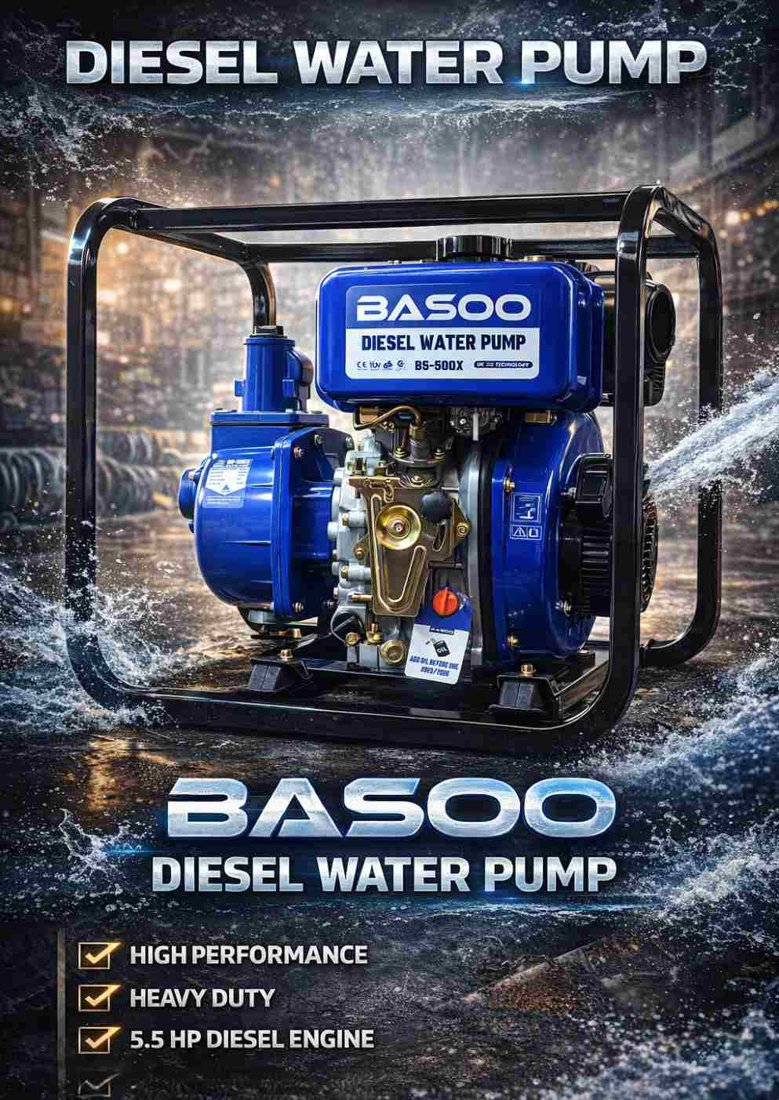
A water pump is only the right pump if it moves the volume you need, to the height you need, with the kind of water you actually have. Get one of those three wrong and you'll be disappointed. Let's make it simple.
The three numbers that matter
- Flow rate (L/min or m³/h) — how much water it moves.
- Total head (m) — the vertical lift plus friction losses in the hose.
- Inlet/outlet size (inches) — bigger ports move more water; match your hose.
Manufacturers quote maximum flow and maximum head separately. You never get both at once — as head increases, flow drops. Always size for your real lift, not the headline number.
Match the pump to the water
Clean water pumps
For irrigation and tank transfer of clear water, a clean-water pump such as the BASOO BS-50X (2") is efficient and affordable.
Trash pumps
If the water carries mud, leaves or small solids, choose a trash pump like the BS-50TX with a larger impeller clearance that won't clog.
Diesel pumps for all-day duty
For sustained irrigation, the diesel BASOO BS-5P80X (3") delivers high flow with low fuel cost over long shifts.
Submersible & sewage pumps
For wells, flooded basements or sewage, a submersible like the BS-QDX series — or a cutter pump such as the WQX range for solids — sits in the water and primes instantly.
Suction lift and priming
Surface pumps can only "pull" water up about 7–8 m at sea level. If your source is deeper, use a submersible or a jet pump. Keep suction hoses short and airtight, and fit a foot valve to hold prime.
Quick tip: oversize the hose, not the pump. A 3" pump choked by a 2" hose loses much of its rated flow.
Need help matching a pump to a field or site? Our official dealers can size it with you locally.
Comments
Be the first to comment.