
Pressure Washer Buying Guide: Bar, Flow and Nozzles Explained
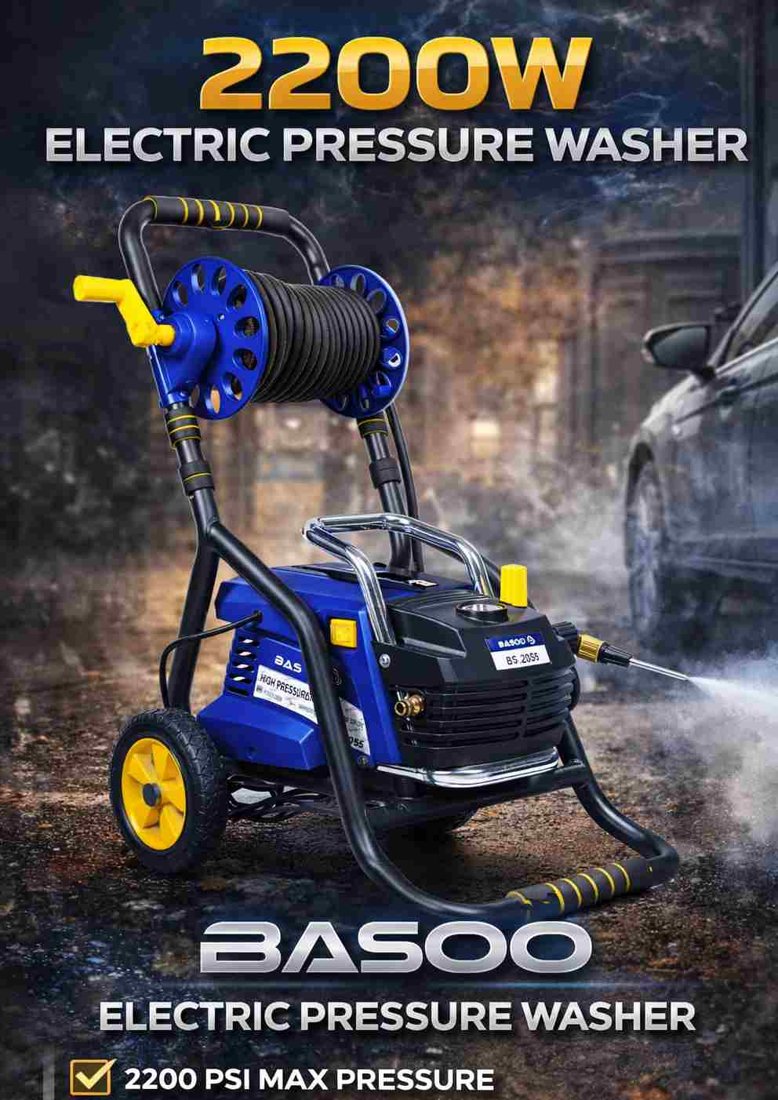
Pressure washers are rated by two numbers that work together: pressure (bar) and flow (L/min). Buy on pressure alone and you'll end up with a machine that blasts hard but rinses slowly. Here's how to choose well.
Pressure (bar) breaks the dirt loose
Higher bar dislodges stubborn grime. Around 110 bar suits cars and patios; 150–180 bar handles concrete, machinery and heavy site cleaning.
Flow (L/min) carries it away
Flow rinses the loosened dirt off the surface. More litres per minute means faster cleaning over large areas. Two washers at the same bar can clean very differently if their flow rates differ.
Electric or petrol?
- Electric (e.g. BASOO BS-2050CR, 2000W): light, quiet, ideal near a power point for home and light commercial work.
- Petrol (e.g. BASOO BS-3300X): fully portable and far more powerful — the choice for sites, farms and heavy-duty cleaning where there's no socket.
Nozzles change everything
Most damage and most disappointment come from the wrong nozzle:
- 0° (red): a needle jet — extreme power, easy to gouge surfaces. Use sparingly.
- 15°/25° (yellow/green): the everyday workhorses for most cleaning.
- 40° (white): gentle, wide fan for delicate surfaces and rinsing.
- Soap/black: low pressure for applying detergent.
Start with a wider nozzle and a test patch, then step up only if you need to. You can't un-gouge paint.
Care
Flush the system with clean water after using detergent, never run the pump dry, and store electric units away from frost. A little care keeps the seals and pump healthy for years.
Comments
Be the first to comment.