
How to Size a Generator: Running Watts vs Starting Watts
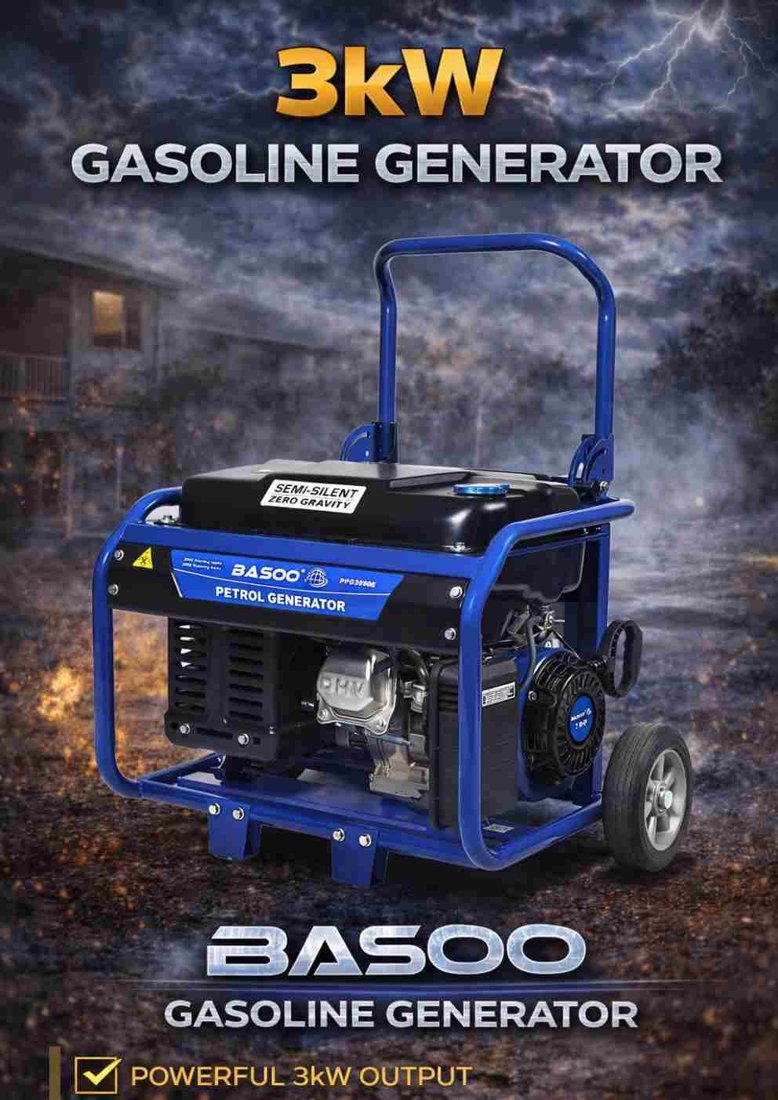
The single most common mistake we see when customers buy a generator is choosing one that's too small. A generator that can't handle the surge when a motor starts will trip, stall, or — worse — slowly damage the equipment plugged into it. This guide walks you through sizing a generator properly so you buy once and buy right.
Running watts vs starting watts
Every electrical device has two numbers that matter:
- Running watts — the continuous power a device needs while it operates.
- Starting (surge) watts — the extra burst, often 2–3× the running figure, that motors draw for a fraction of a second at start-up.
Resistive loads such as lights, heaters and chargers have no real surge. Inductive loads — fridges, pumps, compressors, power tools — spike hard at start-up. Your generator must cover the total running watts plus the single largest starting surge on the circuit at one time.
A simple four-step calculation
- List every device you'll run at the same time.
- Write down the running watts for each (check the nameplate or manual).
- Add the running watts together.
- Add the largest single starting surge to that total.
Example: 800W fridge (running) + 600W lights + a water pump rated 900W running / 2,700W starting. Total running = 2,300W. Add the pump's 2,700W surge → you need roughly 5,000W of headroom.
Matching the load to a BASOO generator
| Use case | Typical load | Suggested model |
|---|---|---|
| Sensitive electronics / camping | up to 2 kW | BASOO Super Silent BS-S2000ISG (inverter) |
| Home backup essentials | 3–5 kW | BASOO BS-6500 |
| Workshop / small site | 5–6.5 kW | BASOO BS-8500 |
| Continuous 3-phase site power | 10 kW+ | BASOO BS-15000DXS-3 diesel |
Inverter or conventional?
If you'll run laptops, routers or any device with a circuit board, choose an inverter generator like the Super Silent range. Inverter technology delivers clean, stable sine-wave power and throttles the engine to match the load — quieter operation and far better fuel economy at part load.
Don't forget altitude and duty cycle
Engines lose roughly 3–4% of power per 300 m above sea level, so size up if you work at altitude. And never plan to run a generator continuously at 100% — aim for 70–80% of rated output for long service life.
Still unsure? Send us your load list through the contact page and our team will recommend the right model — or, if you buy for resale, ask about wholesale pricing.
Comments
Be the first to comment.